
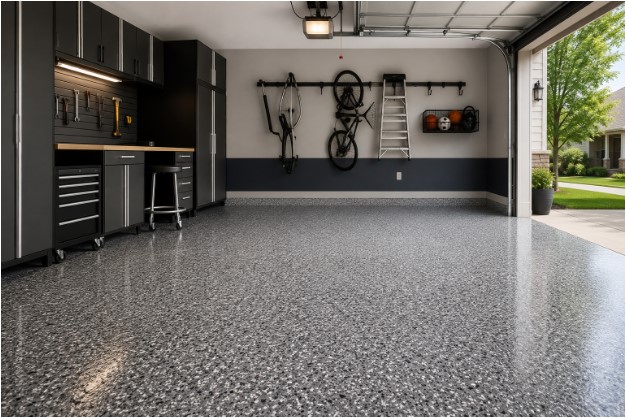

A residential garage experiences more daily wear than many homeowners realize. Vehicles bring in water, dirt, road salt, and other debris, while oil, cleaning products, tools, storage equipment, and heavy items can place additional stress on the floor. Over time, untreated concrete may become stained, dusty, cracked, or difficult to maintain. Ordinary floor paint can improve the appearance of concrete, but it may not provide the durability or protection needed for regular garage use. Flake epoxy offers an alternative by combining a resin-based coating with decorative vinyl flakes and a protective topcoat. The result is a seamless, textured surface that can improve the appearance of the garage while helping protect the concrete beneath it. For homeowners considering a garage flooring upgrade, understanding the benefits and requirements of a flake epoxy system can make it easier to choose a solution that fits the space, maintenance expectations, and desired appearance.
What Is a Flake Epoxy Floor?
A flake epoxy floor is created by applying a resin-based coating over properly prepared concrete and distributing decorative flakes across the wet surface. Once the coating cures, excess flakes are removed before a clear protective topcoat is applied. Homeowners can explore decorative flake epoxy flooring options in different colors, flake sizes, and coverage patterns. Some floors use a light scattering of flakes, while full-broadcast systems provide a denser pattern across the entire surface. Because the flakes are distributed during installation, each floor can have a slightly different appearance. However, the overall blend can be selected to complement the garage walls, cabinets, vehicles, storage systems, and other interior features.
Flakes Create a More Finished Garage Appearance
Bare concrete can make a garage feel unfinished, even when other parts of the space have been carefully organized. Adding a decorative flake system introduces color and texture, helping the floor become an intentional part of the garage design. Neutral combinations of gray, tan, black, white, and brown can coordinate with a wide range of garage interiors. Homeowners who want the floor to become a stronger design feature can also select more noticeable color combinations. The right blend may help connect the floor with existing cabinets, wall colors, vehicles, workshop equipment, or other elements. Instead of looking like a simple utility surface, the garage can feel more cohesive and organized.
The Flake Pattern Can Conceal Everyday Marks
Garage floors are exposed to dust, tire marks, small scratches, dirt, and other everyday signs of use. These marks can be particularly noticeable on a solid-color surface. A decorative flake pattern breaks up the appearance of the floor, making minor marks and variations less visually obvious. This does not eliminate the need for cleaning, but it can help the floor maintain a consistent appearance between routine maintenance sessions. Medium-toned blends are often practical for active garages because they can help disguise small amounts of dust and debris. Very dark or extremely light surfaces may make certain types of dirt more noticeable.
Flake Epoxy Provides a Protective Surface
Concrete is porous, which means liquids can penetrate an untreated slab. Water, oil, automotive fluids, and cleaning products may leave stains when they soak into the concrete. An epoxy coating creates a sealed surface that reduces direct exposure of the concrete to these substances. A protective clear topcoat adds another layer over the decorative flakes and underlying coating. A sealed floor does not mean spills can be ignored. Prompt cleanup is still important. However, the coating can make routine spill cleanup easier and reduce the likelihood of liquids immediately penetrating the concrete.
The long-term performance of the floor depends on several factors, including:
- Concrete preparation
- Coating quality
- Installation method
- Number of coating layers
- Topcoat selection
- Moisture conditions
- Proper curing
For this reason, homeowners should evaluate the complete flooring system rather than choosing a contractor based only on the appearance of the finished sample.
Surface Texture Can Improve Traction
Garages can become wet when vehicles bring in rain, melting snow, or moisture from outside. Cleaning and washing the floor can also create temporary wet conditions. A completely smooth surface may become slippery when wet. Decorative flakes introduce some texture to the coating, and installers can add an appropriate slip-resistant material to the topcoat when additional traction is needed.
The ideal texture depends on how the garage will be used. A basic parking area may have different requirements from a workshop, home gym, hobby area, or vehicle-detailing space.
Homeowners should balance traction with cleanability. A heavily textured surface can provide additional grip, but deeper texture may also make dirt more difficult to remove. The installer can help determine an appropriate texture for the intended use.
Flake Epoxy Can Make Garage Maintenance Easier
Unfinished concrete contains pores and rough areas where dust, dirt, and other debris can collect. Oil and automotive fluids can also become difficult to remove after they penetrate the slab. A properly installed flake epoxy system provides a more continuous surface that can generally be swept, dust-mopped, vacuumed, or cleaned with an appropriate mild cleaner.
Routine maintenance may include:
- Removing loose dirt and grit
- Sweeping or dust-mopping regularly
- Cleaning spills promptly
- Washing the floor with a suitable cleaner
- Avoiding abrasive cleaning tools
- Following the installer’s care recommendations
Regular cleaning is useful for more than appearance. Removing grit can also reduce the amount of abrasive material that comes into contact with the protective topcoat.
Harsh chemicals should not be used unless the flooring manufacturer or installer confirms that they are compatible with the coating system.
Why Garages Are a Natural Fit for Flake Flooring
Garage flooring needs to balance several characteristics. It should look attractive while also handling vehicle traffic, spills, dirt, moisture, and regular maintenance. Professionally installed garage epoxy floor coatings with decorative flakes can be suitable for residential garages, workshops, hobby spaces, home gyms, and organized storage areas.
However, not every garage requires the same flooring system. A lightly used residential garage may have different requirements from a workshop where homeowners regularly work on vehicles, use heavy equipment, or handle automotive fluids. The condition of the existing concrete and the expected use of the space should therefore be considered before selecting the coating.
Concrete Preparation Determines the Finished Result
One of the most important parts of a flake epoxy installation happens before the coating is applied. Epoxy cannot correct every problem with an existing concrete slab, so the surface must be inspected and properly prepared. Mechanical grinding is commonly used to remove weak surface material, old coatings, dirt, and contaminants. It can also create an appropriate surface profile that helps the coating bond with the concrete.
Depending on the condition of the slab, preparation may also involve:
- Repairing cracks
- Filling holes
- Addressing damaged edges
- Removing oil contamination
- Cleaning the concrete
- Evaluating moisture conditions
- Preparing previous coating residues
Oil contamination deserves particular attention because residue can interfere with adhesion. Moisture may also need to be evaluated when the slab shows signs of vapor movement. Skipping or rushing preparation can contribute to problems such as peeling, bubbling, uneven coverage, or premature coating failure. Homeowners should therefore ask contractors how the concrete will be prepared before comparing installation estimates.
Color and Flake Size Influence the Final Design
Flake size can have a noticeable effect on the appearance of the finished garage floor. Smaller flakes can create a finer, more uniform pattern, while larger flakes can produce a bolder visual effect. Color also affects the overall appearance and maintenance requirements. Gray and neutral blends are popular because they can coordinate with many garage interiors. Mixed colors can also help break up the appearance of dust and small marks.
Homeowners should view physical samples whenever possible. A small digital image may not accurately represent how a particular blend will look when it covers an entire garage. Lighting should also be considered. Natural daylight, overhead fixtures, wall colors, and surrounding surfaces can all affect how the flakes and protective topcoat appear.
Plan for Curing Time and Garage Downtime
Installing a new garage floor requires temporary use restrictions. Vehicles, storage containers, tools, and movable equipment generally need to be removed before preparation and coating begin.
The amount of time required before the garage can be used again depends on factors such as:
- Coating materials
- Number of layers
- Weather conditions
- Temperature and humidity
- Topcoat selection
- Installation method
Homeowners should receive clear instructions regarding when it is safe to walk on the floor, replace storage items, and park vehicles inside the garage. Returning heavy equipment or vehicles too soon can interfere with the curing process and potentially damage the new coating. Planning for downtime in advance can help protect the finished floor and minimize disruption.
Choosing a Local Flooring Contractor
Homeowners in Woodland Park, NJ, should look for a flooring contractor who evaluates the existing concrete before recommending a coating system.
A professional should be able to explain the planned:
- Surface preparation
- Crack and concrete repairs
- Coating layers
- Flake coverage
- Topcoat
- Slip-resistance options
- Curing requirements
- Maintenance recommendations
A written estimate should clearly explain what is included in the project. Comparing contractors only by the total price can be misleading if one proposal includes extensive grinding, repairs, and multiple coating layers while another includes only basic preparation.
Epoxy Shine provides flake and garage flooring solutions for residential properties in Woodland Park, NJ, and nearby areas. The appropriate system should be selected according to the concrete condition, garage environment, and expected use.
What to Consider Before Installing Flake Epoxy
Before approving a garage flooring project, homeowners should consider several practical questions:
- What condition is the existing concrete in?
Cracks, stains, damaged areas, previous coatings, and moisture concerns should be identified before installation. - How will the surface be prepared?
Homeowners should understand whether mechanical grinding, repairs, cleaning, and other preparation steps are included. - Which coating system will be used?
The base coat, decorative flakes, and protective topcoat should be clearly identified. - What level of traction is appropriate?
The finish should match the way the garage will be used. - How much downtime is required?
Knowing the expected curing schedule makes it easier to plan vehicle and storage arrangements. - What maintenance is recommended?
The contractor should provide instructions for routine cleaning and products that should be avoided. - What does the written estimate include?
Preparation, repairs, materials, labor, topcoat, and other project details should be clearly explained.
Final Thoughts
Flake epoxy can improve both the appearance and everyday performance of a residential garage floor. Its decorative pattern can make minor marks less noticeable, while the sealed coating can help protect concrete from spills, dirt, and routine wear.
However, choosing an attractive flake blend is only one part of a successful flooring project. Proper concrete preparation, crack repair, moisture evaluation, coating quality, topcoat selection, traction, and curing all influence the finished result.
For homeowners considering a garage upgrade, the best approach is to evaluate the complete flooring system rather than focusing only on color or price. With appropriate preparation and installation, flake epoxy can create a garage floor that looks more finished, supports regular use, and remains easier to maintain over time.